How Can a Roof Air Ventilator Improve Industrial Ventilation and Reduce Indoor Heat?
Proper ventilation is essential for maintaining a comfortable and healthy environment in industrial buildings, warehouses, factories, and commercial spaces. Excessive heat, humidity, and stagnant air can affect employee comfort, workplace conditions, and overall productivity. A Roof Air Ventilator provides an effective solution by removing hot, stale air from indoor spaces and allowing fresh air to circulate.
A roof ventilation system is particularly useful in large buildings where heat accumulates near the ceiling due to machinery, production activities, and outdoor temperatures. By improving natural air circulation, roof air ventilators can help reduce indoor heat buildup and create a better working environment.
Cooltech Systems offers ventilation solutions for industrial and commercial requirements. Businesses searching for a Roof Air Ventilator Manufacturer in Ahmedabad, Roof Air Ventilator Distributor in Gujarat, or Roof Air Ventilator Supplier in India should consider their building size, ventilation needs, and operating conditions when selecting a suitable system.
What Is a Roof Air Ventilator?
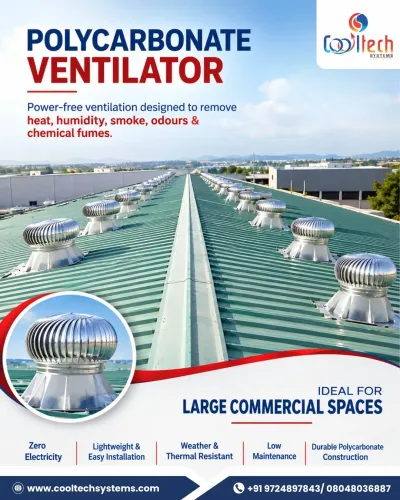
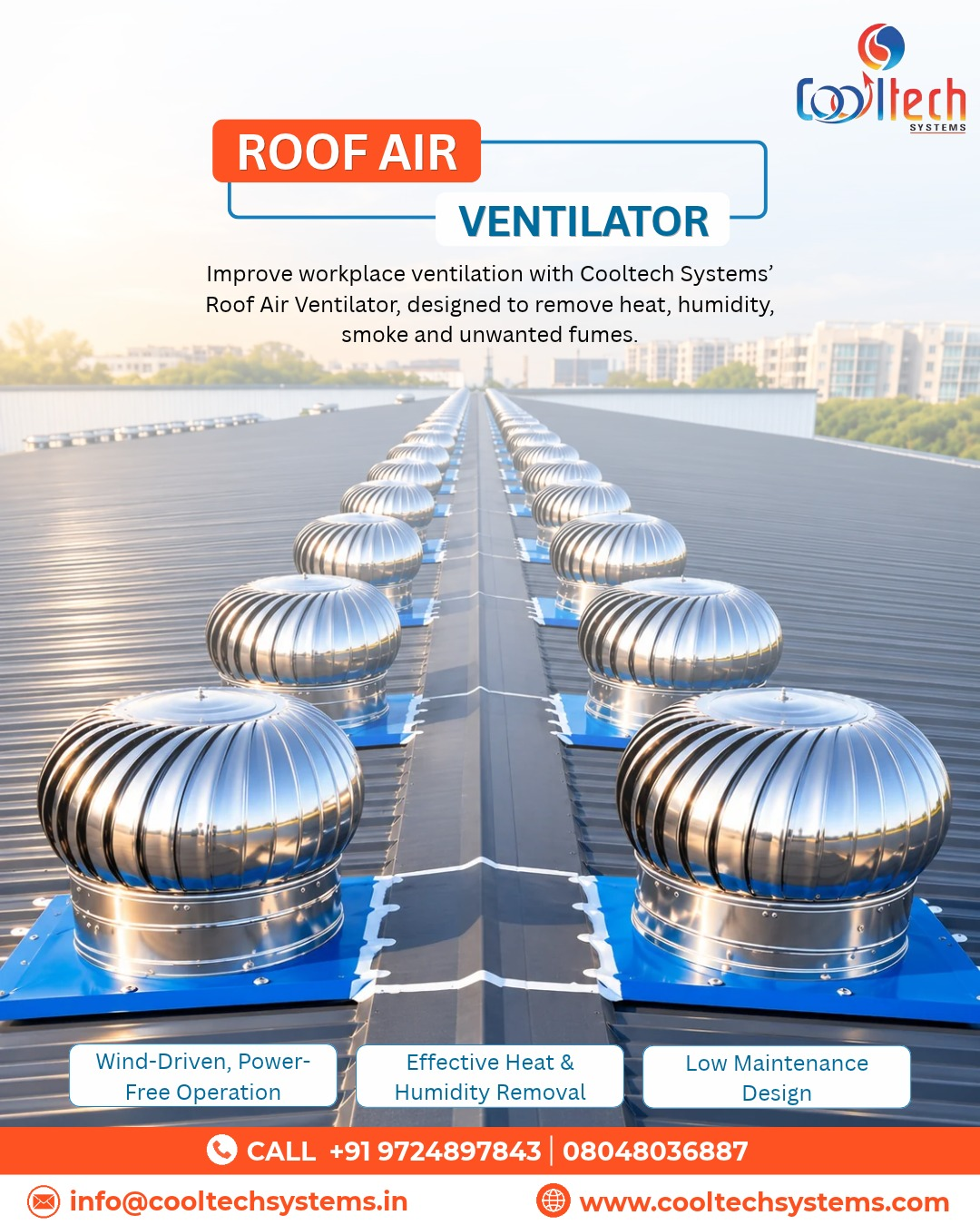
A Roof Air Ventilator is a ventilation device installed on a building’s roof to remove hot, humid, and stale indoor air. Many industrial roof ventilators use wind energy to rotate their turbine blades and create an exhaust effect without requiring an electric motor.
These ventilators are commonly installed in factories, warehouses, workshops, and commercial buildings. They help improve airflow by allowing accumulated hot air to escape through the roof while replacement air enters through suitable openings.
A properly selected industrial roof ventilator supports natural ventilation and helps maintain better indoor air circulation.
How Does a Roof Air Ventilator Work?
A wind-driven roof ventilator generally works through natural wind movement and the pressure difference between indoor and outdoor spaces.
When wind passes over the turbine, it causes it to rotate. This rotation helps draw warm indoor air upwards and release it outside the building. As hot air escapes, fresh air enters through windows, doors, louvers, or other ventilation openings.
This continuous air movement helps reduce heat accumulation and improve overall indoor ventilation. The actual performance depends on wind conditions, building design, installation, and the availability of fresh-air inlets.
Key Benefits of Installing a Roof Air Ventilator
1. Reduces Indoor Heat
A roof exhaust ventilator helps release accumulated hot air from the upper sections of a building, supporting a more comfortable indoor environment.
2. Improves Air Circulation
It encourages continuous air movement and helps reduce stagnant air in factories, warehouses, and industrial facilities.
3. Helps Remove Humidity and Stale Air
Proper roof ventilation can help remove excess moisture and stale air, depending on the building’s airflow arrangement.
4. Supports Energy Savings
Wind-driven natural roof ventilators operate without a dedicated electric motor, helping reduce electricity consumption compared with powered exhaust ventilation.
5. Improves Workplace Comfort
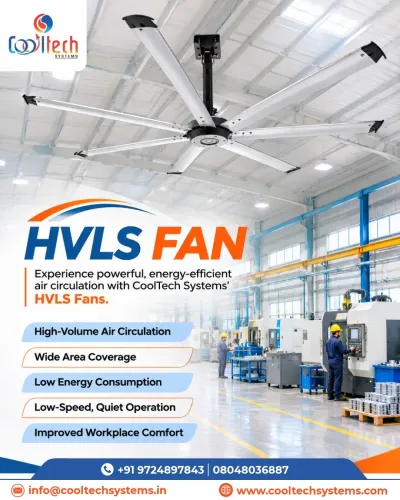
Better ventilation can make industrial workspaces more comfortable for employees, especially in buildings where machinery and production processes generate heat.
6. Offers Low Maintenance Requirements
Many turbine-style industrial roof ventilators have a simple mechanical design. However, periodic inspection and maintenance are still necessary to ensure smooth operation.
Different Types of Roof Air Ventilators
Different buildings require different ventilation solutions. Some commonly used types include:
1. Wind-Driven Roof Ventilator
A wind-driven roof ventilator uses outdoor wind to rotate its turbine and help exhaust hot indoor air. It supports natural ventilation without requiring a dedicated electric motor.
2. Turbo Roof Ventilator
A turbo roof ventilator uses rotating turbine blades to support natural air extraction from the building. It is commonly considered for factories, warehouses, and other large spaces.
3. Industrial Roof Ventilator
An industrial roof ventilator is designed for factories, manufacturing units, and large industrial buildings where heat and stale air need to be removed.
4. Powered Roof Ventilator
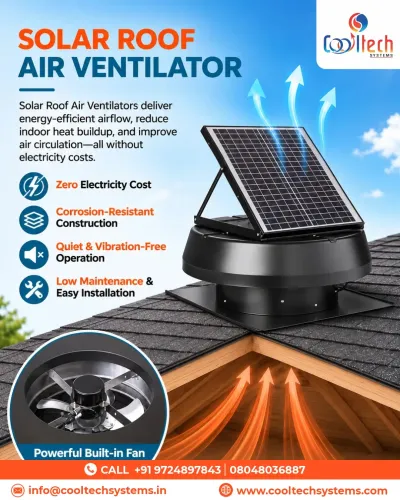
An electric-powered roof ventilator uses a motor-driven fan to extract indoor air. It is useful where ventilation requirements cannot be reliably met through wind-driven systems alone.
Applications of Roof Air Ventilators
A roof air ventilation system can be used in several types of buildings where proper air circulation is important.
· Manufacturing Industries: Helps remove heat generated by machinery and production processes.
· Warehouses: Supports ventilation in large storage spaces.
· Factories: Helps release hot and stale air from production areas.
· Workshops: Improves air movement in enclosed working environments.
· Commercial Buildings: Supports better ventilation in suitable commercial spaces.
· Agricultural Buildings: Helps improve air circulation in storage and processing areas.
Important Factors to Consider When Choosing a Roof Air Ventilator
Before selecting an industrial roof air ventilator, consider the following factors:
· Building Size: Select a ventilator capacity that matches the building’s area and height.
· Ventilation Requirements: Identify how much hot air needs to be removed.
· Material Quality: Choose durable and corrosion-resistant materials suitable for the environment.
· Weather Conditions: Consider local wind conditions, rainfall, and environmental exposure.
· Installation Location: Select rooftop positions that support effective air extraction.
· Air Inlet Availability: Ensure sufficient openings are available for fresh air to enter the building.
· Maintenance Requirements: Check the ventilator’s accessibility and maintenance needs.
Why Are Roof Air Ventilators Important for Industrial Buildings?
Industrial buildings often experience heat buildup due to machinery, lighting, manufacturing processes, and limited natural airflow. Installing a suitable industrial ventilation system helps remove accumulated hot air and improve indoor air movement.
A well-planned roof ventilation solution can support employee comfort, help manage humidity, and improve overall workplace conditions. For buildings with high heat loads or specific air-quality requirements, roof ventilators may need to be combined with powered exhaust fans or other ventilation equipment.
For businesses comparing a Roof Air Ventilator Manufacturer in Ahmedabad or looking for a Roof Air Ventilator Supplier in India, selecting equipment according to the building’s actual ventilation requirements is important.
Why Choose Cooltech Systems for Roof Air Ventilation Solutions?
Selecting the right roof ventilation solution requires consideration of building dimensions, heat generation, airflow requirements, and environmental conditions.
Contact Cooltech Systems for inquiries about roof air ventilation requirements and suitable solutions for industrial and commercial buildings.
When evaluating a roof ventilator solution, consider:
· Compatibility with your building structure.
· Ventilation requirements and expected airflow.
· Material suitability for the installation environment.
· Availability of fresh-air inlet openings.
· Accessibility for inspection and maintenance.
Contact Cooltech Systems to discuss your industrial ventilation requirements and explore a suitable roof air ventilator solution.
Frequently Asked Questions (FAQs)
1. What is a Roof Air Ventilator used for?
A roof air ventilator removes hot, humid, and stale indoor air from buildings while supporting fresh-air circulation. It is commonly used in factories, warehouses, workshops, and commercial buildings.
2. How does a wind-driven roof ventilator work?
It uses natural wind to rotate its turbine blades, helping draw hot indoor air out through the rooftop opening. Fresh air enters through suitable openings in the building.
3. Does a roof air ventilator require electricity?
Wind-driven roof ventilators generally do not require electricity. However, powered roof ventilators use electric motors to operate.
Keywords