How Can a Solar Roof Air Ventilator Improve Indoor Ventilation and Reduce Heat Buildup?
Excessive heat inside factories, warehouses, and commercial buildings can affect workplace comfort, equipment performance, and daily productivity. Poor air circulation often traps hot air near the ceiling, making indoor conditions uncomfortable. Installing a Solar Roof Air Ventilator is an effective way to improve ventilation by removing accumulated hot air using renewable solar energy.
CoolTech Systems offers ventilation solutions designed to support better airflow and heat management in industrial and commercial spaces. A solar-powered ventilation system uses energy from sunlight to operate an exhaust fan, helping release unwanted indoor heat while reducing dependence on conventional electricity.
What Is a Solar Roof Air Ventilator and How Does It Work?
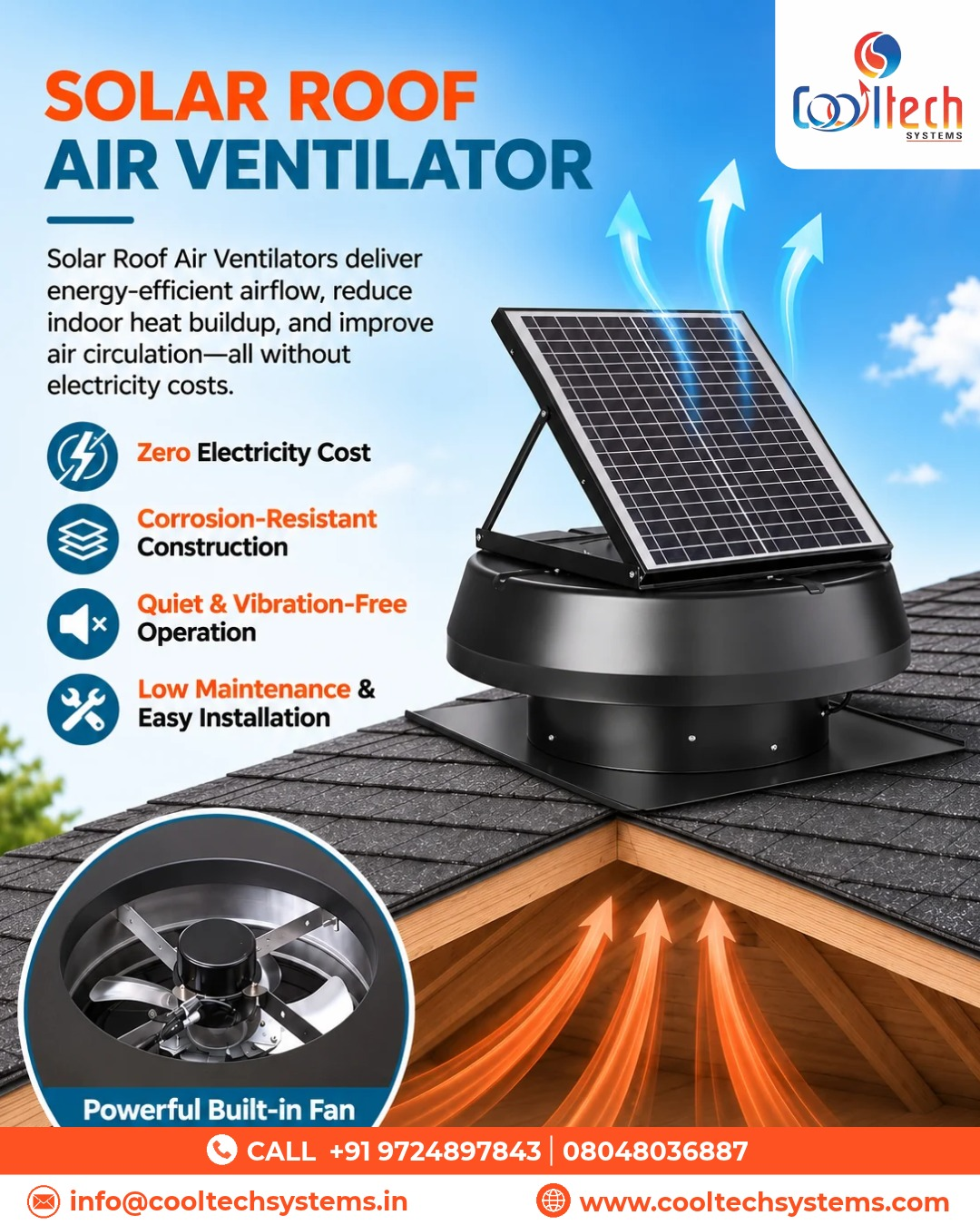
A Solar Roof Ventilator is a rooftop ventilation system that uses a solar panel to generate electricity for operating an exhaust fan. The fan draws hot, stale air from inside the building and releases it outside.
As indoor air moves out, fresh air enters through suitable doors, windows, louvers, or other ventilation openings. This creates an airflow cycle that helps improve indoor air circulation.
A Solar Powered Roof Ventilator generally consists of:
· Solar panel for generating electrical power.
· Exhaust fan for removing indoor hot air.
· Protective housing for outdoor installation.
· Supporting mounting structure.
· Electrical connections and control components.
The overall ventilation performance depends on solar capacity, fan specifications, building dimensions, and available fresh-air entry points.
What Are the Benefits of Installing a Solar Roof Air Ventilator?
A properly selected Solar Air Ventilation System offers several practical advantages for industrial and commercial buildings.
· Reduced Electricity Consumption: Uses solar energy to operate the ventilation fan, reducing dependence on grid electricity.
· Better Air Circulation: Helps remove accumulated hot and stale air from indoor spaces.
· Heat Management: Helps remove trapped heat from factory roofs and large buildings.
· Environment-Friendly Operation: Uses renewable solar energy instead of relying entirely on conventional power.
· Improved Workplace Comfort: Helps create more comfortable indoor conditions for employees.
· Moisture and Stale Air Removal: Helps exhaust humid air and improve ventilation when properly designed.
Where Are Industrial Roof Ventilators Commonly Used?
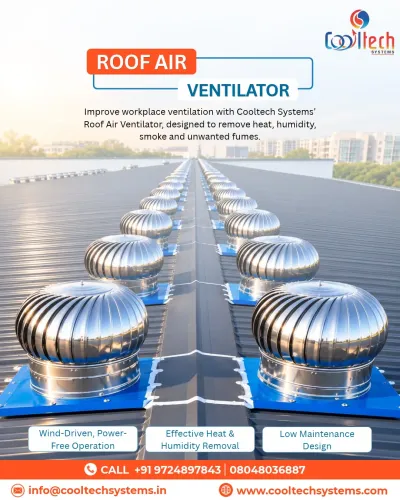
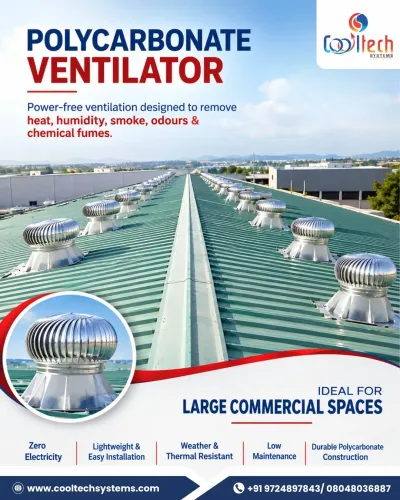
An Industrial Roof Ventilator is suitable for buildings where heat accumulation and insufficient airflow create operational challenges.
Some common applications include:
· Manufacturing Factories: Removes heat generated by machinery, production processes, and industrial equipment.
· Warehouses: Helps improve air movement in large storage facilities.
· Commercial Buildings: Supports ventilation in commercial and institutional spaces.
· Industrial Workshops: Helps release hot air generated during fabrication and other operations.
· Agricultural Buildings: Supports ventilation in suitable farm structures and storage sheds.
· Production Units: Helps manage indoor heat and improve air circulation in manufacturing environments.
How to Choose the Right Energy-Efficient Roof Ventilator?
Selecting an Energy Efficient Roof Ventilator requires understanding the building’s ventilation requirements. A system that works well in a small workshop may not provide sufficient airflow for a large manufacturing facility.
Consider these important factors before installation:
· Building Size: Evaluate the total floor area and internal roof height.
· Airflow Capacity: Select an appropriate fan capacity according to the required air changes.
· Solar Panel Capacity: Check whether the panel can provide sufficient power for the ventilation fan.
· Roof Compatibility: Consider roof structure, slope, mounting arrangements, and weather exposure.
· Ventilation Openings: Ensure suitable fresh-air entry points are available.
· Maintenance Requirements: Check fan accessibility, panel cleaning, and electrical connections.
Working with an experienced Solar Ventilator Manufacturer can help identify a suitable ventilation arrangement for your building.
Why Choose CoolTech Systems for Solar Roof Ventilation?
CoolTech Systems focuses on practical ventilation solutions for industrial and commercial environments. Choosing the right rooftop ventilation arrangement can help businesses manage indoor heat, improve airflow, and reduce their dependence on conventional electrical power.
Whether you need a Solar Exhaust Fan, a factory ventilation solution, or a complete rooftop air circulation arrangement, selecting equipment that matches your building requirements is essential for effective results.
Looking to improve factory ventilation and reduce indoor heat buildup? Contact CoolTech Systems to explore a suitable Solar Roof Air Ventilator for your facility.
Frequently Asked Questions (FAQs)
1. What is a Solar Roof Air Ventilator?
A Solar Roof Air Ventilator is a rooftop exhaust system that uses electricity generated by a solar panel to remove hot and stale air from inside a building.
2. How does a Solar Powered Roof Ventilator work?
Its solar panel converts sunlight into electrical energy, which powers an exhaust fan. The fan pushes accumulated indoor air outside through the rooftop ventilation system.
3. Can a Solar Roof Ventilator reduce factory heat?
Yes. It helps remove accumulated hot air from indoor spaces. Actual temperature improvement depends on building insulation, ventilation openings, sunlight, and airflow capacity.
Keywords